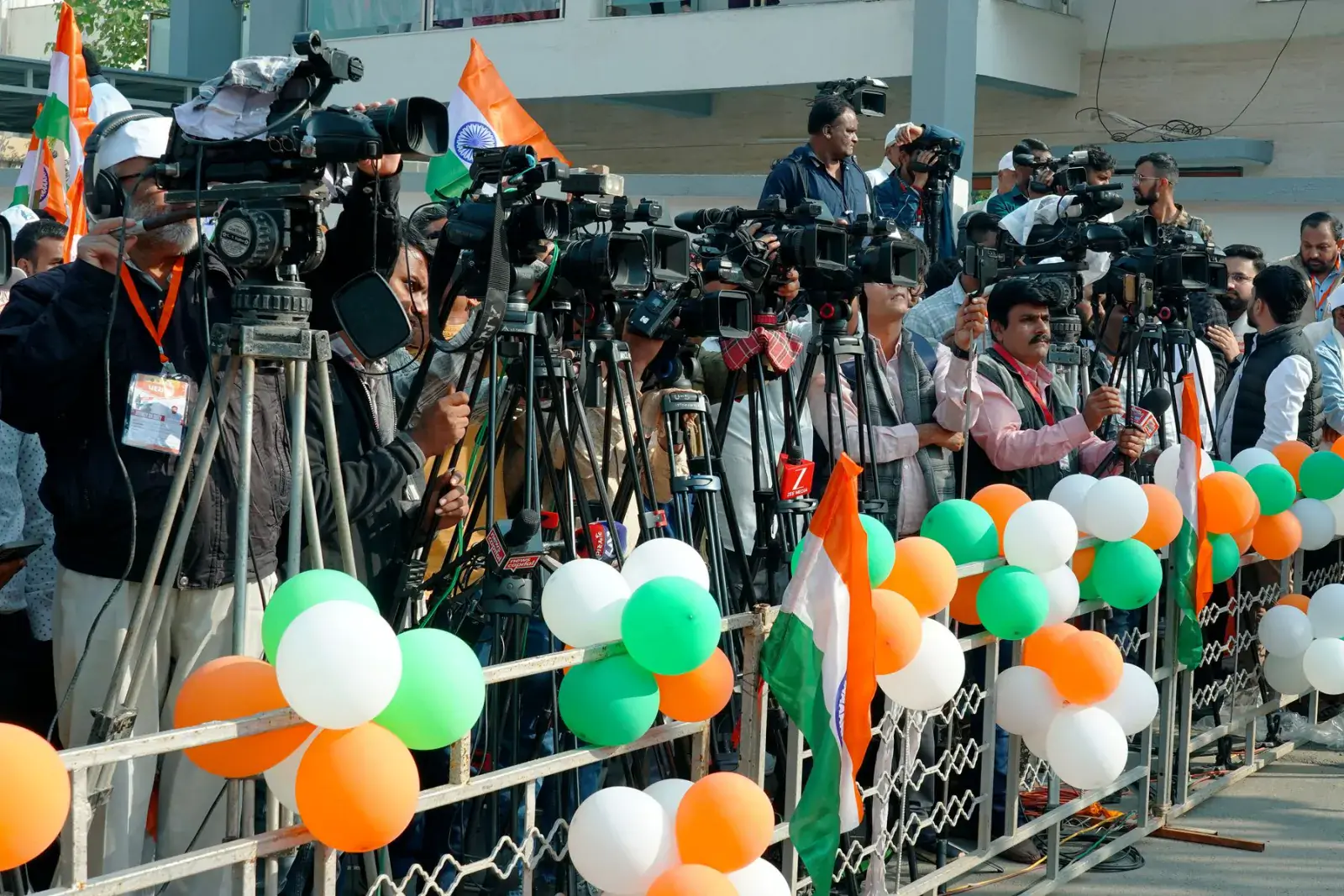
Most event budgets are shaped like a spike. Effort accumulates for weeks, peaks on the day, and then drops almost to zero within seventy-two hours. Meanwhile the audience that could not attend — customers, partners, prospective hires, journalists, the wider industry — never learns that anything happened at all.
Post-event communication is not a courtesy step at the end of a project plan. It is the part of the programme where a single day of activity becomes evidence: of expertise, of direction, of the calibre of people an organisation can convene.
Plan the communication before the event, not after
The difference between usable post-event material and a folder of unsorted photographs is a decision made weeks earlier. If the goal is a feature article, someone needs to brief a writer and secure interviews on the day. If the goal is a short film, the shot list has to exist before the stage is lit. If the goal is a set of quotable insights, speakers should know their session will be excerpted.
- Define two or three outputs and the audience for each.
- Assign an owner for capture — photography, video, note-taking, interviews.
- Agree approvals in advance, especially for quotes from senior leaders and guests.
- Decide what will not be published, so the team can capture freely.
Sequence beats volume
Publishing everything at once wastes the material. A sequence sustains attention: a short summary while the day is still current; a substantive piece — an article, a recap film, a set of takeaways — within the following week; a longer-form asset such as a publication, report or interview series once there is time to do it properly.
The experience ends. The story shouldn't.
Write for people who were not in the room
Internal recaps often assume shared context. The audience that matters most usually has none. A useful test: could a reader who has never heard of the event understand, in the first paragraph, what was discussed and why it is relevant to them?
That shift also changes tone. Gratitude-led copy — thanking everyone who attended — belongs in a short note to guests. Everything published outward should lead with substance: what was argued, what was announced, what changed.
Be careful with claims
Credible communication is specific and verifiable. It describes what happened, quotes people accurately, and avoids superlatives that cannot be supported. Media relations works the same way: the honest, well-timed, genuinely relevant story travels further than the inflated one, and it does not cost anything to correct later.
It is also worth being clear internally about what communication can and cannot promise. Outreach can be relevant, well-targeted and professionally handled. Coverage remains an editorial decision that sits with the publication.
Give internal audiences the same care as external ones
Employees who could not attend are often the largest untapped audience for event content. A well-edited fifteen-minute version of a leadership session, distributed with a short written summary, does more for internal alignment than a company-wide invitation nobody could accept.
Close the loop
Finally, communication should end where the event's objective began. If the purpose was to move a partner network towards a new commercial model, the post-event sequence should make that easier: the summary, the assets, the follow-up conversation, all pointing in the same direction.
Handled this way, the event stops being a date in a calendar and becomes a body of material an organisation can keep using — long after the room has been cleared.